
Cedar Decking Installation

Cedar wood contains natural oils, particularly cedar oil, which gives the wood its distinct aroma. These oils have inherent properties that make cedar resistant to decay and rot. The oils act as a natural barrier against moisture, preventing water from penetrating deep into the wood fibers, which is a common cause of decay in other types of wood.

Cedar’s natural oils also act as a deterrent to many types of insects, including termites, ants, and beetles. These insects are less likely to infest cedar wood compared to other, less naturally resistant woods. This makes cedar a popular choice for outdoor decks where insect damage is a concern.

Features

  • Natural Resistance: Cedar’s natural oils protect against decay, insects, and fungi, making it a durable choice for outdoor projects.

  • Cost Effective: Cedar provides an affordable decking solution, balancing quality and budget for long-lasting results.

  • Locally Sourced: Benefit from locally sourced cedar from the Pacific Northwest, ensuring a reliable and abundant supply of high-quality wood.
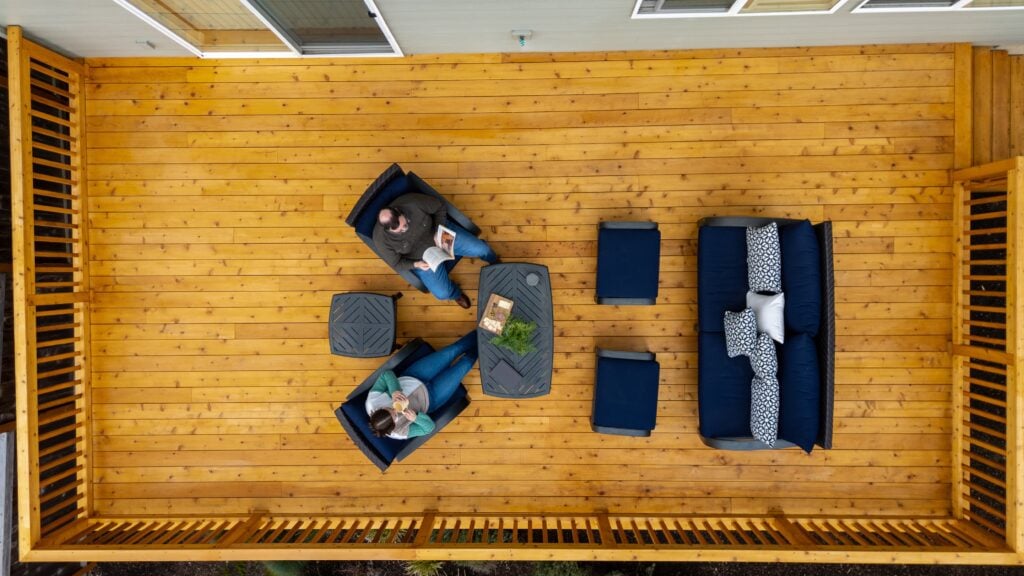
Aerial view of a wooden deck with two people sitting in blue chairs at a table, a blue couch with pillows, small tables, plants, and ottomans arranged neatly on the deck.

Western Red Cedar Decking

  • Native Species: Western Red Cedar is the only species of its kind native to western North America, making it a unique local resource.

  • Sustainably Managed: Sourced from some of the world’s most sustainably managed forests, it is harvested at a slow rate, allowing forests to regenerate as quickly or faster than the rate of harvest.

  • Naturally Grown: Cedar is grown without artificial intervention and is never treated with harmful chemicals or preservatives when sourced from the Pacific Northwest.
Warranty

Cascade Fence & Deck provides a Lifetime Workmanship Warranty. As long as you live in your home we will guarantee our workmanship. Period.

How Much Does Cedar Wood Decking Cost?

Cedar wood decking is typically $1,000–$3,000 less than composite decking on an average-sized project, making it a great choice for homeowners looking for a natural, budget-friendly option. While it does require regular staining and maintenance to preserve its beauty and longevity, many homeowners love cedar for its classic wood grain, rich color, and timeless appeal

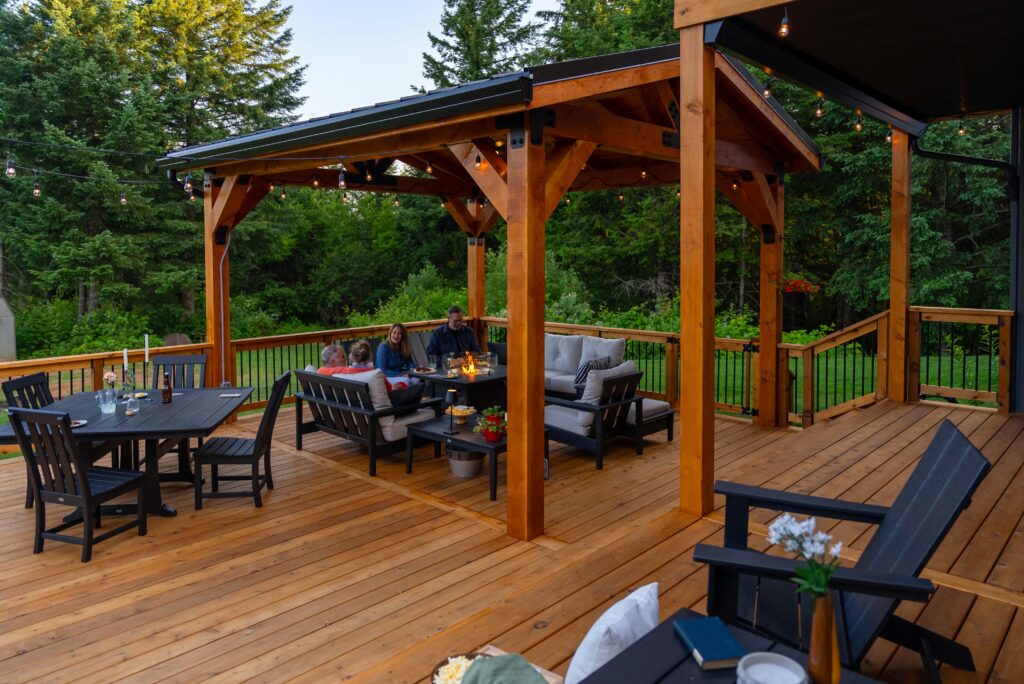
A group of people sit around a firepit under a wooden pergola on a spacious deck surrounded by trees. There are string lights, an outdoor dining table, and comfortable seating.
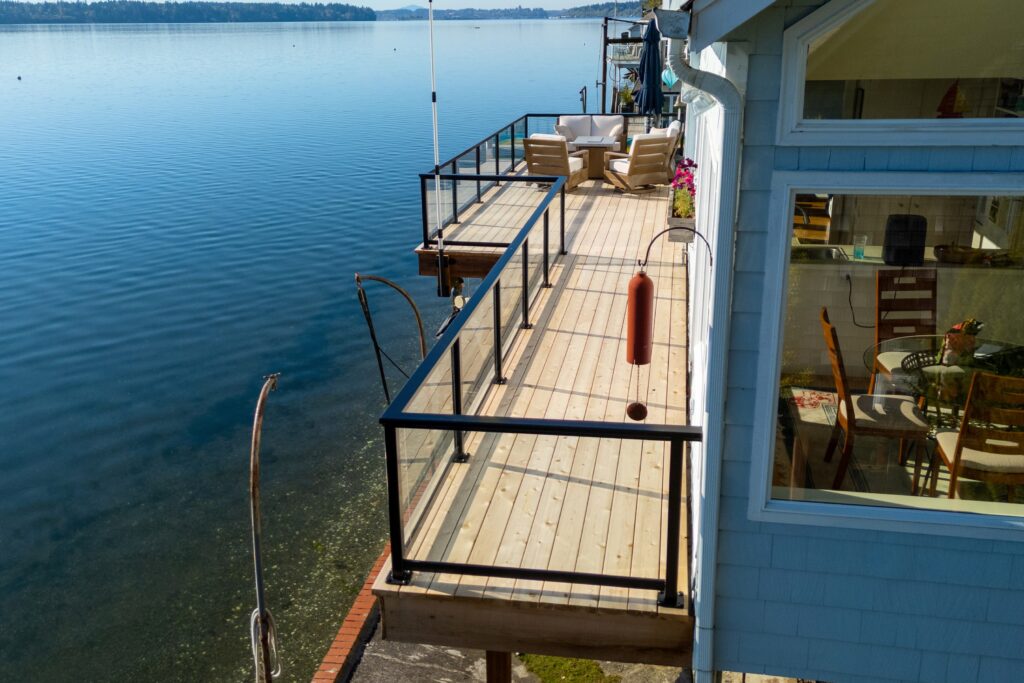
A wooden deck with glass railings extends over clear water beside a house. There are outdoor chairs and a table on the deck, and large windows show a dining area inside the house.

How long does Cedar Decking Last?

  • No Maintenance: Without any upkeep, a cedar deck may last approximately 10 to 15 years.
  • Infrequent Maintenance: Performing maintenance every five years, such as power-washing and sealing, can extend the deck’s lifespan to 20 to 30 years.
  • Regular Annual Maintenance: With yearly cleaning, sealing, and prompt repairs, a cedar deck can last between 25 to 40 years.

Expert Insights on Cedar Decking

Deck Cost

A man wearing a black cap sits on grass under a wooden deck frame, using a power tool to work on the beams, with sunlight filtering through the structure.

Considering deck options in the Pacific Northwest? Cedar decks provide a natural, affordable choice, especially for simple builds without railings. As deck size, stairs, and multi-level designs are added, costs increase. While hardwood and composite are available, cedar remains a cost-effective and attractive option.

Decking Boards

A man in glasses and a red shirt holds three different decking material samples. Large text on the left reads Common Decking Materials on a blue background.

In the Pacific Northwest, common deck materials include composite, cedar, and hardwood. Composite, like Deckorators, offers durability and low maintenance. Cedar is naturally water-repellent but needs regular upkeep. Hardwood, such as Ipe, is very durable but requires frequent maintenance to maintain its color. Each option has different benefits and care needs.

Cons of Composite

Text reads 5 Cons of Composite Decking with logos for Deckorators, Trex, and MoistureShield on a wood background, and samples of composite decking boards at the bottom.

Thinking about composite decking? It requires less maintenance but can fade, scratch, stain, and get hotter than cedar. Wood-based composites may swell at cut edges, though mineral-based ones don’t. While durable, cedar remains cooler and avoids these issues.

Get numbers with no hassle

We understand that it can be hard to find the right contractor to build your deck. That’s why our design process allows you to choose your options and compare prices easily.