
When winter rolls into the Pacific Northwest, we’ve had homeowners ask us how overhead structures hold up with the cold and snowfall. We sat down with one of our estimators, Kamden, to ask him some of the most common winter related questions we get about acrylic patio covers (APCs). Below is a video of our interview with him.
1. Can snow crack acrylic panels?
We led with one of the most common questions. Every winter, we get several calls asking whether snow can damage or crack an acrylic patio cover. Kamden didn’t hesitate when he replied:
“No, snow cannot crack acrylic panels. They’re designed for that 45 pounds per square foot, which is the standard snow load in our area.”
He went on to explain that it’s not just the material itself, it’s the whole design system:
“We consider sizing, panel widths, beam placement… all that stuff. We take every factor into account to make sure we’re meeting that 45-pounds-per-square-foot requirement so the snow won’t crack your panels.”
In simple terms: when we install an acrylic patio cover, it’s engineered with our winters in mind. You get the light transmission and outdoor comfort you want without worrying about what a February snow dump might do.
2. Can the acrylic portion be replaced later?
Winter storms in the PNW sometimes bring more than snow, wind, debris, broken branches, and the occasional “where did that tree even come from?”. So we asked Kamden what happens if something other than snow damages a panel.
He told us this is one of the major advantages of acrylic systems:
“Absolutely. That’s one of the big benefits to an acrylic cover. Down the road, if a big tree trunk falls and cracks a panel, you can just pull a few parts off, remove the panel, and put a new one on like it never happened.”
He also pointed out how flexible these systems are if your needs change:
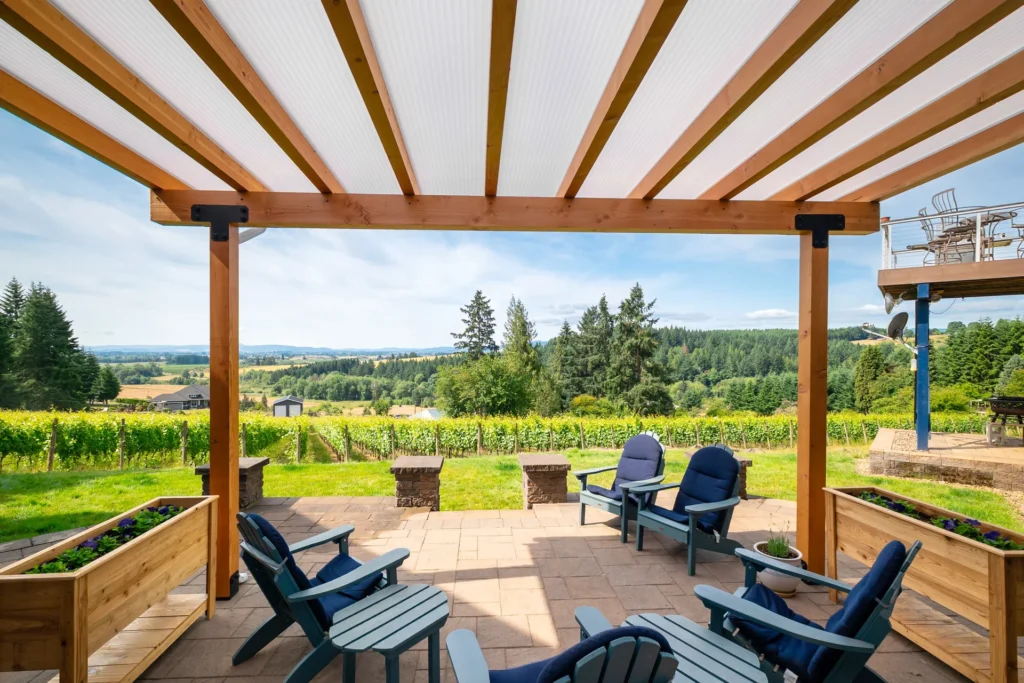
“If you start with a small portion of your patio covered and decide later, ‘You know what? I really love staying out of the rain,’ you can add onto it. It’s super easy and we can make it look like it was always there.”
Even existing pergolas or older structures can often be upgraded:
“If you already have a pergola or some existing space you want to add acrylic panels to, that’s really easy too. We can design it so it installs cleanly with no problem.”
So while winter can be unpredictable, APCs are designed to be adaptable, repairable, and expandable long after the initial build.
3. Do acrylic covers turn yellow over time?
This is another big concern that comes up more frequently in the winter when the light is lower and discoloration becomes more noticeable. We asked Kamden how modern acrylic panels hold up.
His answer was clear:
“No. Acrylic covers do not yellow over time.”
He explained that most of the yellowed panels you may have seen weren’t actually high quality acrylic:
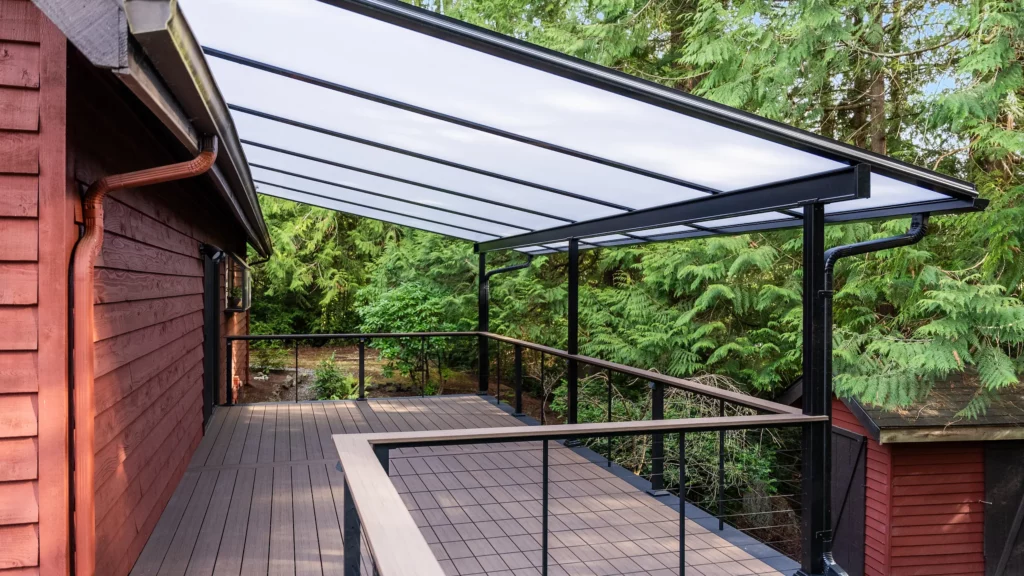
“Sometimes I’m out at projects and people have these really yellow clear panels, but they’re usually thin panels from a box store. Those will definitely yellow over time.”
The acrylic we use comes from American Patio Covers, and Kamden explained why that matters:
“We like to work with American Patio Covers. They have this cool blue technology in their panels so they don’t yellow over time. They’re a very high quality panel.”
So if you’ve seen yellowing before, it was most likely a cheaper material, not a true APC panel.
Final Thoughts
When asked these kind of questions about how Acrylic Patio Covers hold up in the winter we have a high degree of confidence that APC’s will hold up every time. Acrylic patio covers are designed to handle snow, they’re easy to repair or extend in the future, and high quality panels won’t yellow, even after years of exposure.
If you’re thinking about adding an acrylic patio cover or upgrading an existing space before the next storm hits, we’re always happy to take a look and walk you through the options.