
Every backyard is different. Different views, different priorities, different ways families actually use their outdoor space. That’s why we don’t believe in one size fits all designs.
In this walkthrough, our outdoor designer Mike breaks down several real client projects and explains why specific design decisions were made, what problems we were solving, and how thoughtful planning can completely change how a space feels and functions.
Below, we’ll walk through some of those projects and share the same insights Mike gives clients every day.
Designing Around the View, Not Over It
One of the most important lessons from these projects is simple:
start with the view.
In one lakefront project, the homeowners had just built a brand new home with an incredible view of the water. The last thing they wanted was a deck that blocked it.
“They wanted to create an outdoor living space, but do it in a way that didn’t kill their view. That was the big priority.” — Mike, Outdoor Designer
Instead of placing a large deck directly in front of the main windows, we designed a layout that shifted the main entertaining space to the side, keeping sightlines open from inside the home while still creating functional outdoor zones.
Mike often tells clients to start here:
“Look out your back windows. What do you want to see? What don’t you want to see? You’re going to be looking at that every day.”
That single question drives many of the best design decisions.
Why Cable Railing and Dark Finishes Matter
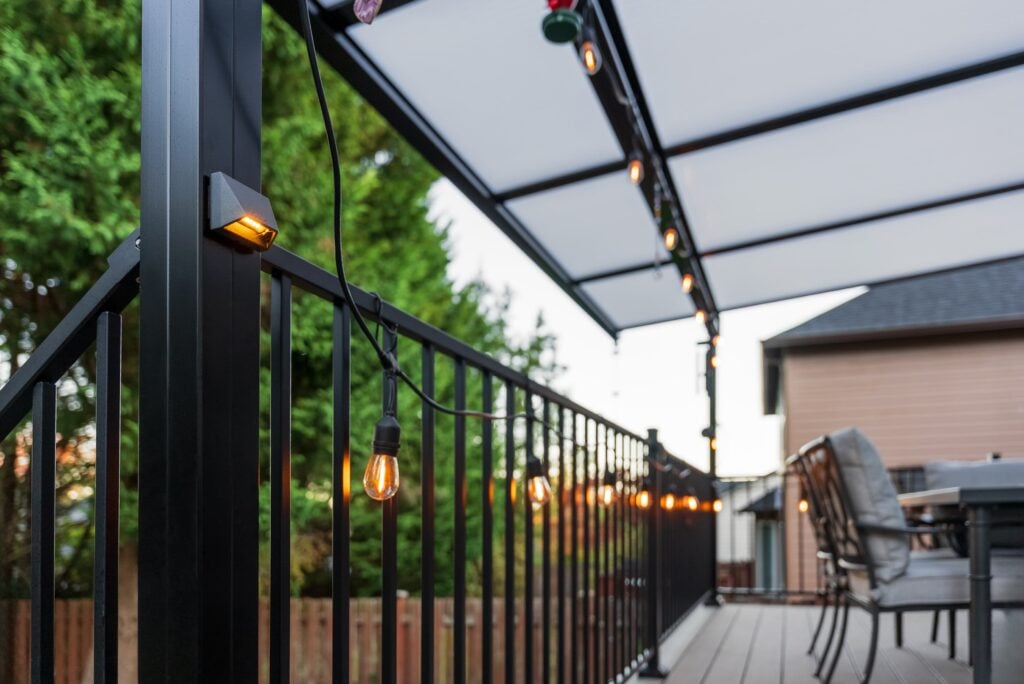
When a view is the focal point, the materials need to stay out of the way.
For the lakefront deck, we used black cable railing paired with steel framing. The goal wasn’t to make the railing disappear entirely, but to make sure your eye naturally looks past it.
“Something about black just doesn’t catch your eye. You kind of see through it, especially with trees and water behind it.”
Cable railing uses minimal material, and darker colors visually recede, which helps preserve open views both from inside the home and from the lake looking back.
The steel framework also played a big role:
“Rather than wood that can gray or discolor over time, they wanted steel framing that stays sharp and continues to look good for years.”
This approach creates long-term durability while maintaining clean curb appeal from every angle.
Starting With a Blank Slate
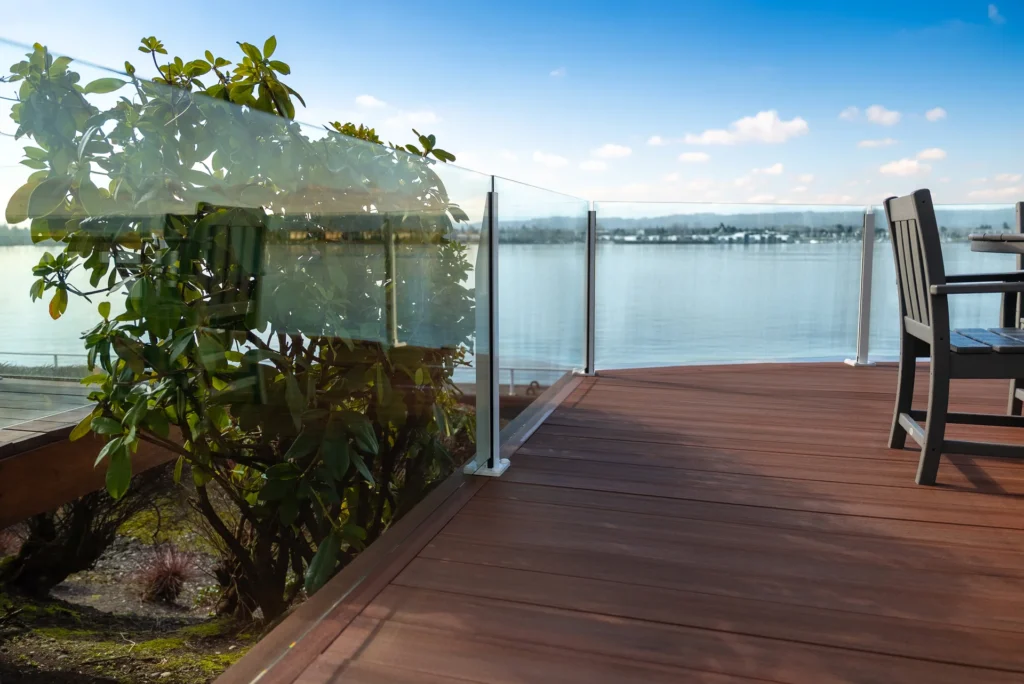
Several projects we asked about in the interview started with no deck at all, just a yard and a lot of possibilities.
“They didn’t have a deck yet, so it was a blank slate. That gave us the freedom to explore all the options.”
In these cases, design wasn’t about replacing something, it was about deciding what role the deck should actually play.
Rather than making the deck the main gathering space, one family chose to keep it more intimate:
“They wanted their big hangouts down by the lake and patio area. The deck was more for grilling, coffee, and smaller groups.”
That decision helped preserve the view and kept each outdoor area focused on how it would actually be used.
Planning for Future Upgrades
Good outdoor design doesn’t just solve today’s needs, it leaves room for tomorrow.
Mike often talks through future possibilities with clients during the design phase:
“Looking at this deck, there’s really no way down, so adding stairs later could be a great next step.”
Other future focused ideas include:
Under-deck water management systems
Covered lower patios
Direct access paths to yards or waterfronts
“Even if you don’t add everything right away, it’s smart to think about how the space could evolve.”
Planning ahead saves time, money, and frustration later.
Creating Outdoor Rooms That Actually Get Used
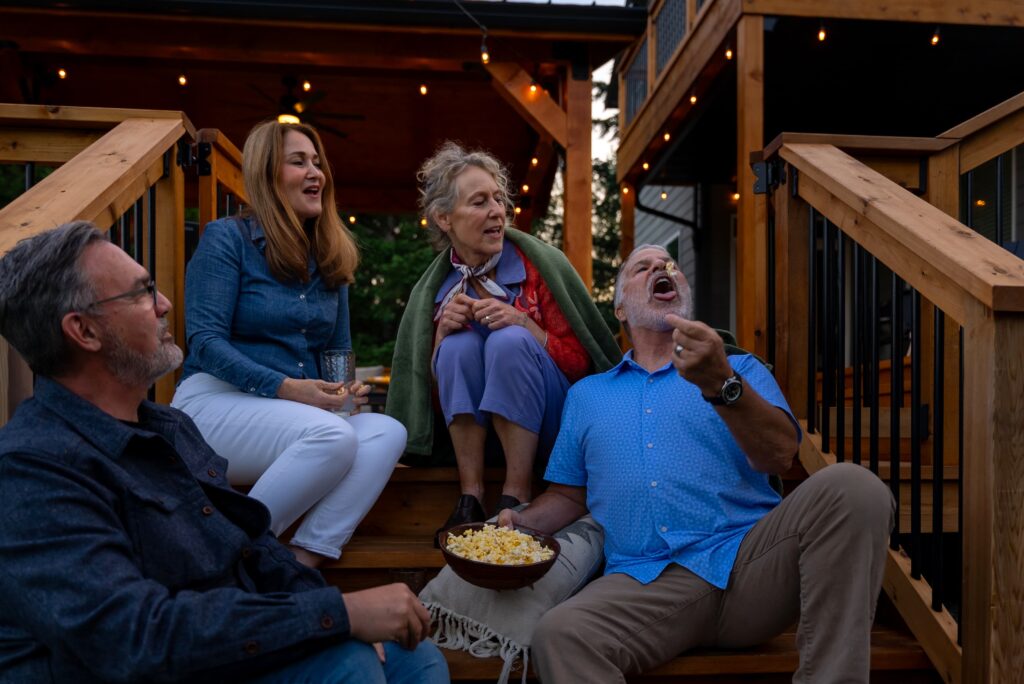
Another common theme across these projects is intentional space planning.
Instead of one large, undefined area, we design outdoor spaces with purpose, grilling zones, seating areas, covered rooms, and open-air spaces.
“You don’t have to cover everything. You can create different rooms so you have the best of both worlds.”
This approach makes outdoor spaces more comfortable and more usable across different weather conditions and seasons.
A Designer’s Tip for Homeowners
If there’s one takeaway Mike consistently shares, it’s this:
“Don’t limit your ideas based on how you think something has to be done. Share what you want it to look like when it’s finished, and we’ll help figure out how to get there.”
Whether it’s preserving a view, upgrading an existing structure, or turning a backyard into a true extension of the home, the best results come from starting with the end goal in mind.