
Adding a sauna to your home can be a great investment in both your health and your daily routine.
But when people start planning, they often focus on the wrong things, details that look impressive, rather than decisions that actually impact how the sauna gets used.
If you want to get it right, the goal isn’t to overbuild. It’s to build something that fits your lifestyle.
Start With Size
It’s easy to assume that a larger sauna is always better.
In practice we’ve found that’s rarely the case.
A 7×7 sauna is already sufficient for most households. It comfortably fits three people seated, or allows one person to lie down while another sits. For typical day to day use, that’s more than enough.
Larger layouts, such as 10×10 can provide more flexibility with bench configurations and capacity. But unless you’re regularly using the space with a group, that additional size often goes underutilized.
And unused space still adds to your build cost, heating time, and ongoing energy use.
The more useful question we often like to ask: how will this space actually be used on a regular basis?
Choose the Right Type of Build
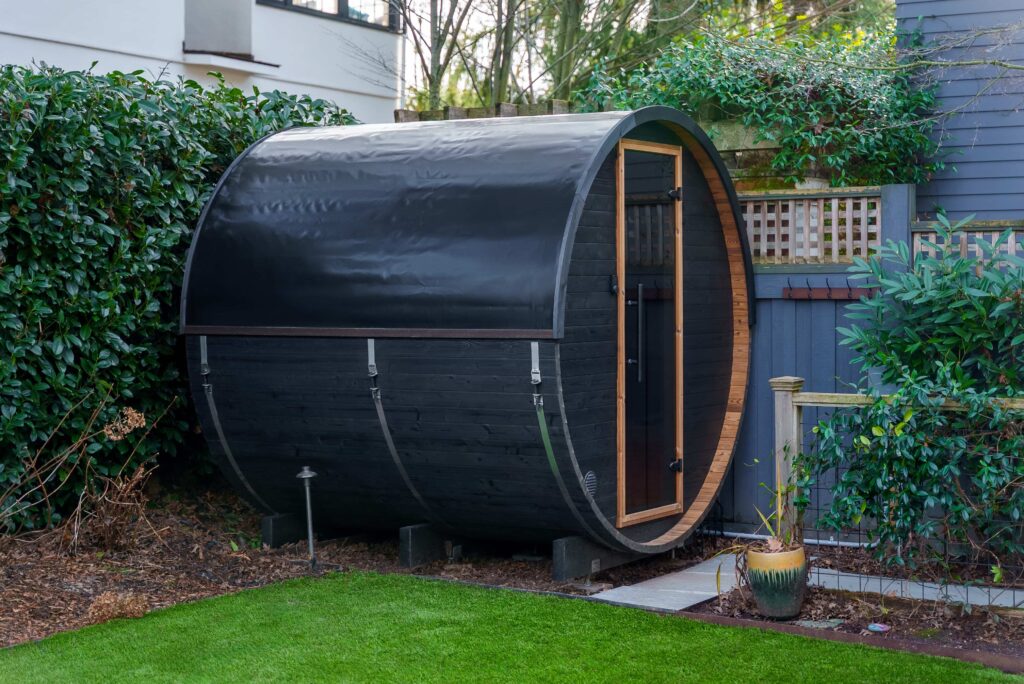
Many people assume they need to commit to a fully custom, permanent structure from the start.
However for some homeowners we recommend some alternative routes.
Depending on your goals and budget, you can consider:
- Pre built units installed in your backyard
- Sauna kits with a more straightforward setup
- On site builds with a simplified design approach
All of these can deliver a high quality experience when done correctly.
A well-designed sauna doesn’t need to be overly complex. It needs to be intentional and well executed.
Select a Stove
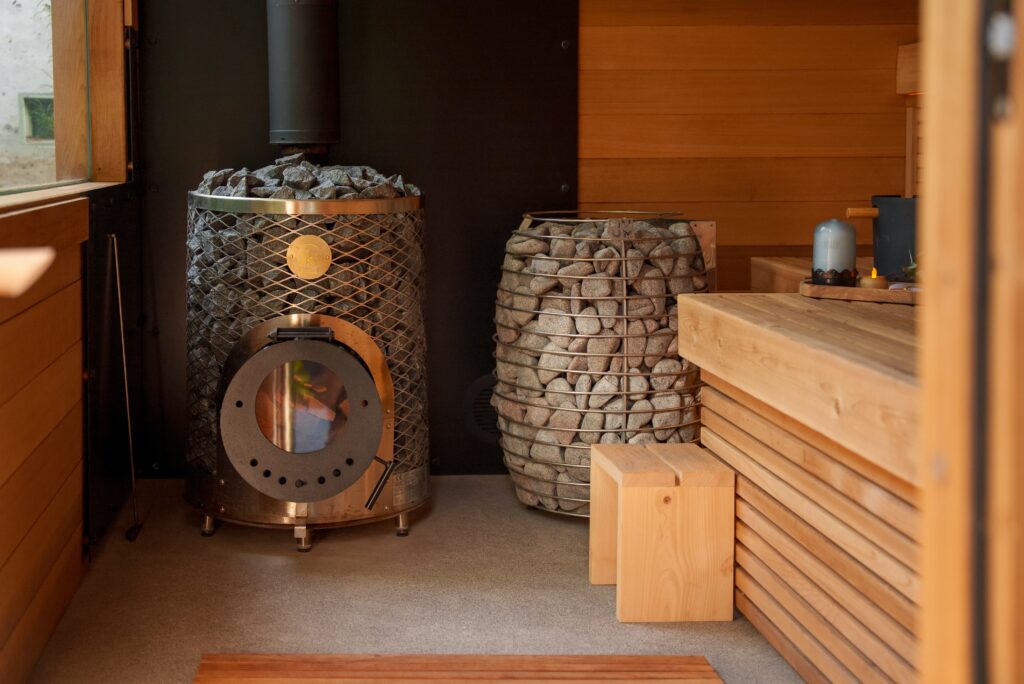
The choice between wood-burning and electric stoves isn’t about which is objectively better—it’s about which fits your routine.
Wood burning stoves
- Offer a traditional, hands-on experience
- Require time to start and manage
- Work best if you enjoy the process
Electric stoves
- Provide convenience and consistency
- Heat up with minimal effort
- Often include remote or Wi-Fi control
Most people ultimately choose electric for its simplicity.
We’ve found that sometimes the more simple approach can lead to more overall sauna use.
Understand the Difference in Cedar Options
Not all cedar performs or feels the same.
In most cases, the choice comes down to:
Tight knot cedar
- More cost effective
- Contains more visible knots
- Knots can retain and radiate more heat
Clear cedar
- Smoother and more uniform
- More comfortable for direct contact
- Cleaner appearance and improved longevity
Both are viable options, but the difference becomes noticeable over time, especially in comfort and overall finish quality.
Prioritize Proper Insulation
Insulation is one of the most commonly overlooked aspects of a sauna build.
While it’s possible to operate without it, doing so typically results in:
- Reduced efficiency
- Longer heat-up times
- Less consistent temperature control
At a minimum, you should include proper wall layering and a heat barrier.
Ideally, the space is fully insulated.
Compared to the total project cost, we’ve found insulation is a relatively small investment that significantly improves performance.
Lighting Should Support the Experience
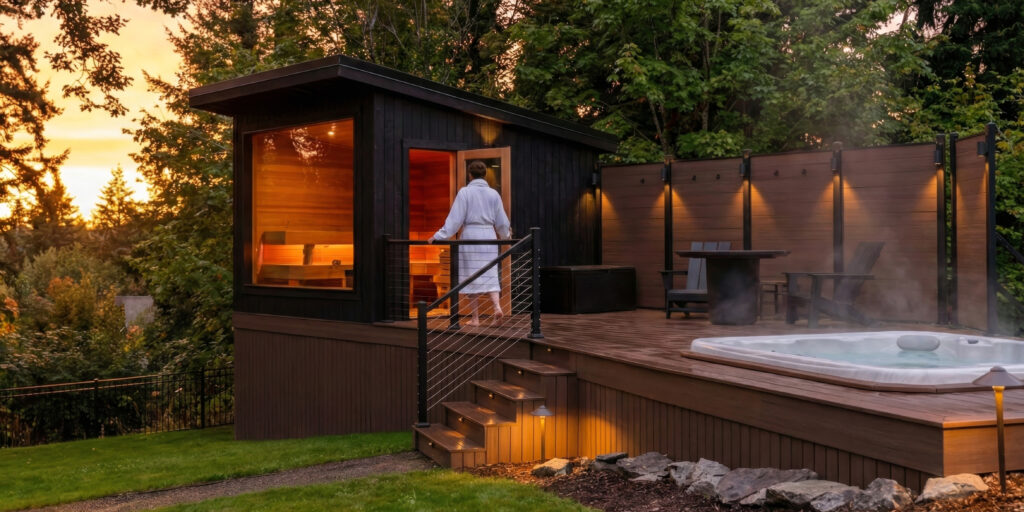
Lighting plays a larger role than most people expect.
Functionally, you need enough visibility to move safely within the space.
But beyond that, lighting defines the atmosphere.
Most well-designed saunas use:
- Soft, indirect lighting
- Under-bench illumination
- Minimal overhead brightness
The goal is a calm, relaxing environment, not a brightly lit utility space.
Consider the Full Setup, Not Just the Sauna
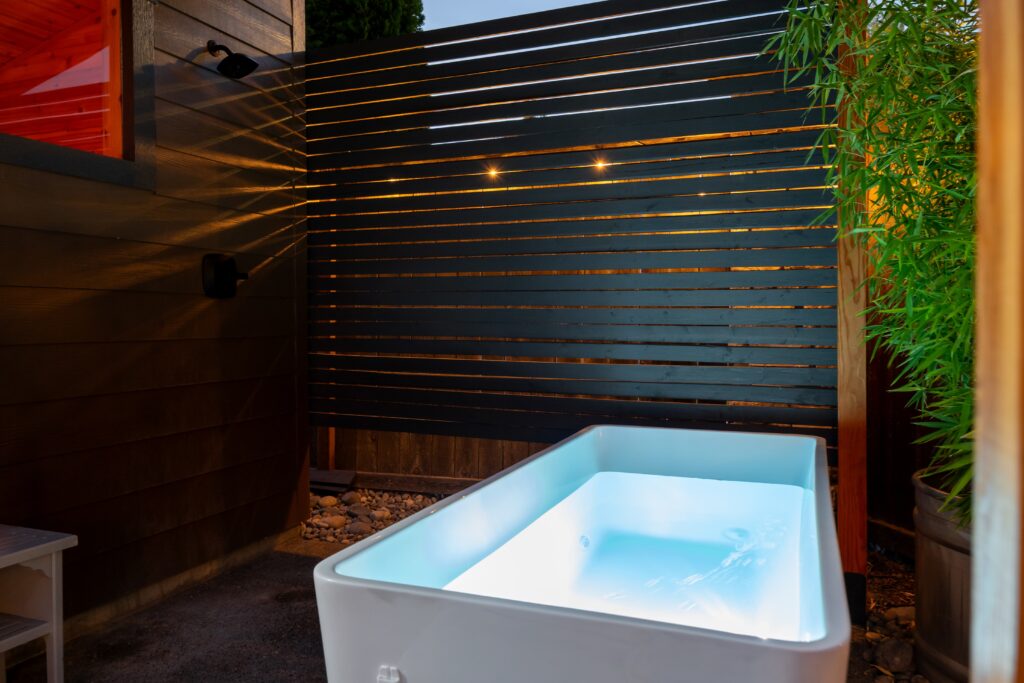
A sauna works best when it’s part of a broader setup.
That includes:
- Access to water (even a simple hose connection)
- A rinse or shower option
- A cold plunge system, ranging from basic to more advanced
You don’t need to install everything at once.
But planning for how these elements work together will improve the overall experience.
Where Most People Go Wrong
The most common mistake isn’t choosing the wrong materials or equipment.
It’s designing around what looks impressive instead of what will actually be used consistently.
Because over time, consistency matters more than features.
Build Around Your Routine
If you start with your routine, how often you’ll use the sauna, how many people will use it, and how much time you realistically have, your decisions become much clearer.
From there, everything aligns:
- The right size
- The right level of complexity
- The right investment
And you end up with a sauna that’s not only well built, but actually used.