
Building a deck is one of the best investments you can make in your home and your quality of life. But when homeowners in Portland, OR and Vancouver, WA start researching costs, they often run into ranges so wide they’re almost useless. $50 to $150 per square foot? That’s a big window.
Unfortunately, deck cost really does vary that much, and for good reason. The cost per square foot of deck depends on a long list of variables, like size, materials, complexity, site conditions, and the features you choose. Think of it like building a home. The price per square foot doesn’t tell you much until you know what you’re actually building.
In this post, we’ll break down what actually drives deck pricing in Portland, show you real project examples across a range of budgets, and share some hard-earned advice from our team on how to get the most out of your investment.
Key Takeaways
- Deck costs in Portland and Vancouver, WA typically range from $50 to $150 per square foot.
- Size and complexity are the biggest cost drivers, but material choice matters too.
- Portland’s wet climate is hard on cheaper materials so invest in quality upfront.
- Small details like cocktail rail and lighting make an enormous difference in the finished result.
- Working with a fixed budget? Scale back on size before you scale back on quality.
What Drives the Cost of a Deck?
Since the price of a deck can vary so much, it’s important to understand the factors that drive cost.
1. Size and Complexity
Size is the most obvious factor, but complexity matters just as much, and sometimes more. A simple square deck at ground level is straightforward to build and you can expect pricing to be on the lower end of the scale. Meanwhile, a multi-level deck off the back of a home on a steep Portland hillside is a completely different project.
Many decks in our area are built 20 to 30 feet off the ground, which requires more specialized materials, larger crews, and often engineering sign-off to ensure structural integrity. Lifting materials up steep slopes or through tight side yards adds time and labor.
Finally, the shape matters too. An angled corner here or a bump-out there might seem minor, but custom framing and cutting adds up fast.
2. Materials
The materials you chose to build your deck with will have a huge impact on cost. An important consideration here is that your choice of materials will significantly affect the cost of your deck in the short and long term with better materials holding up over time. In Portland’s climate especially, the choice of which materials to use deserves careful thought.
Related: Extending the Life of Your Fence or Deck
Common choices include:
- Pressure-treated wood framing with cedar or lower-end composite decking: The classic combination, and generally the most budget-friendly starting point for wood deck cost.
- Mid-range composite decking: Better durability and lower maintenance than wood, with a clean look.
- Premium hardwood or composite decking: Higher upfront cost but excellent longevity and often comes with extended warranties. A quality composite deck will outlast wood in Portland’s climate by a significant margin.
- Steel framing: More expensive than wood framing, but far more durable long-term.
3. Heading and Engineering
Ground-level decks are the most affordable to build. As soon as you go elevated, deck installation costs climb, and for good reason. Raised decks require stronger foundations, larger beams, and more fasteners to safely support the structure. Decks over a certain height require permits and, in many cases, engineering review. Those underground footings you never see? They’re holding the whole thing up, and sizing them correctly is non-negotiable.
4. Site Access and Terrain
Portland’s topography is beautiful and challenging in equal measure. If your backyard requires a crane to get materials in, or if crews have to navigate a steep slope all day, that adds to the cost. It’s just the reality of building in a hilly city.
5. Features and Add-Ons
This is where the range really opens up. A basic deck platform is one thing. A deck with low-voltage lighting, a cocktail rail, a built-in planter box, a racetrack border, hidden fasteners, and a recessed hot tub is something else entirely, but worth every penny if that’s the space you want.
Some add-ons, like step lights, are relatively modest in cost. Others, like an outdoor kitchen or a waterproofing system beneath an upper deck, require more involved installation. Either way, the features you choose should reflect how you actually want to use the space.
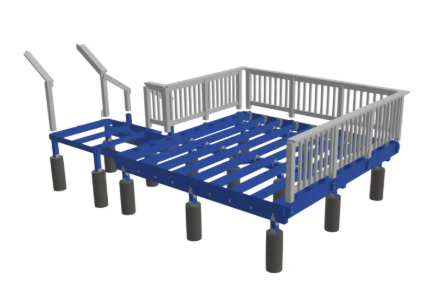
Calculate How Much Your Custom Deck Will Cost
Real Project Examples
Here’s a look at six real projects we’ve built, spanning a range of sizes and budgets. These are real numbers, a good reference point as you start thinking about your own project.
Small Ground-Level Deck
A simple, ground-level deck built with Deckorators composite decking. A simple shape, no railing required (under 6–8 inches from the ground), minimal custom framing, and a clean straightforward build, all make for a relatively cheap deck.
Typical budget: $5,000 – $10,000 (100-200 square feet)
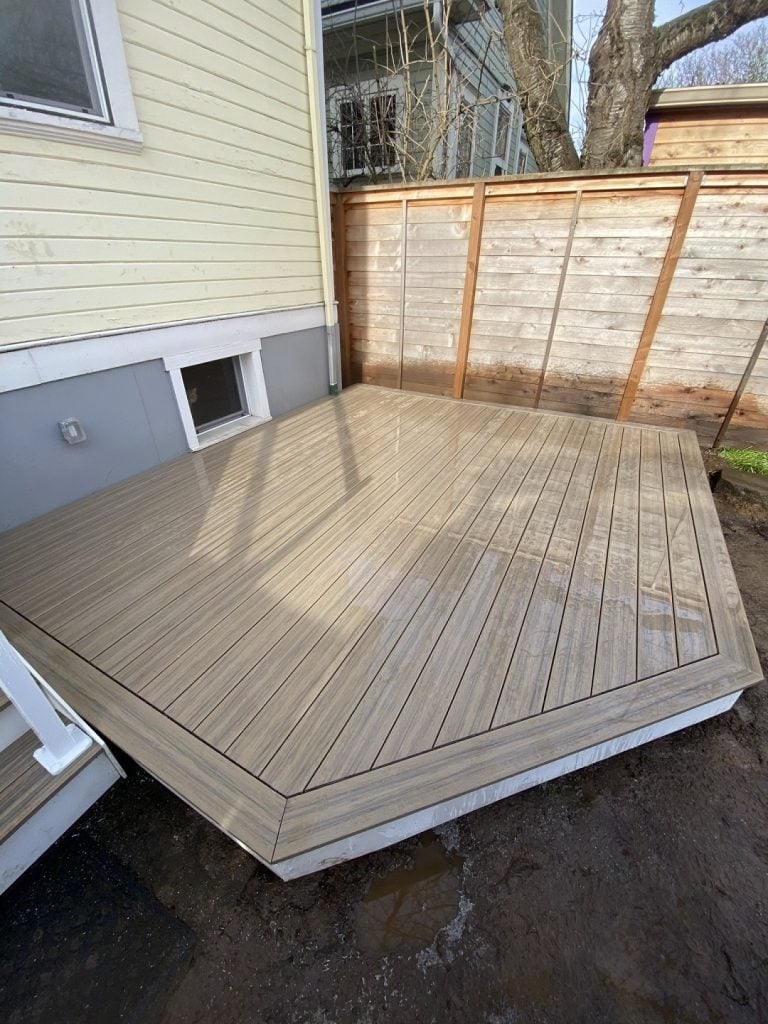
Mid-Size Ground-Level Deck
We built this project as a midway space between a raised concrete patio and a pool area. It’s the perfect spot for a dining set or patio furniture. The simple rectangular shape, no railing, and some stair lights are the main contributors to the total cost for this deck.
Typical budget: $18,000 – $25,000 (400-600 square feet)
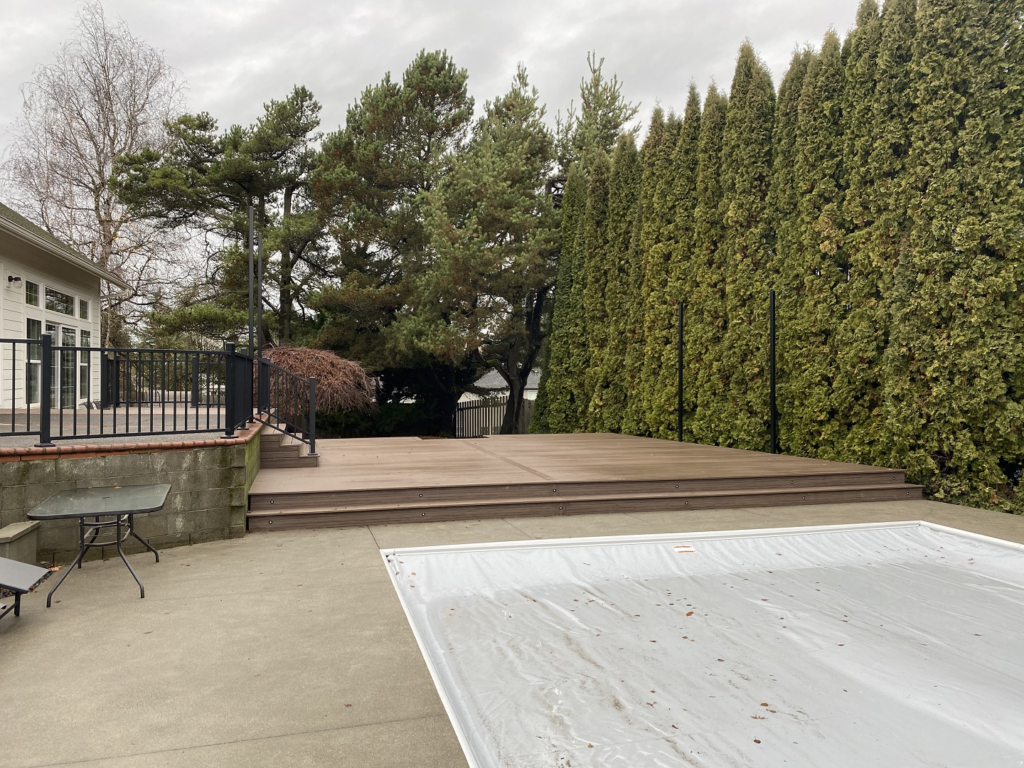
Mid-Size Elevated Deck
The same footprint, but elevated off the ground with railing and stairs increases the overall deck cost. Railing choice makes a real difference here. Glass railing, for example, costs more than aluminum picket but opens up the view significantly.
Typical budget: $30,000 – $40,000 (400-600 square feet)
Large Elevated Deck
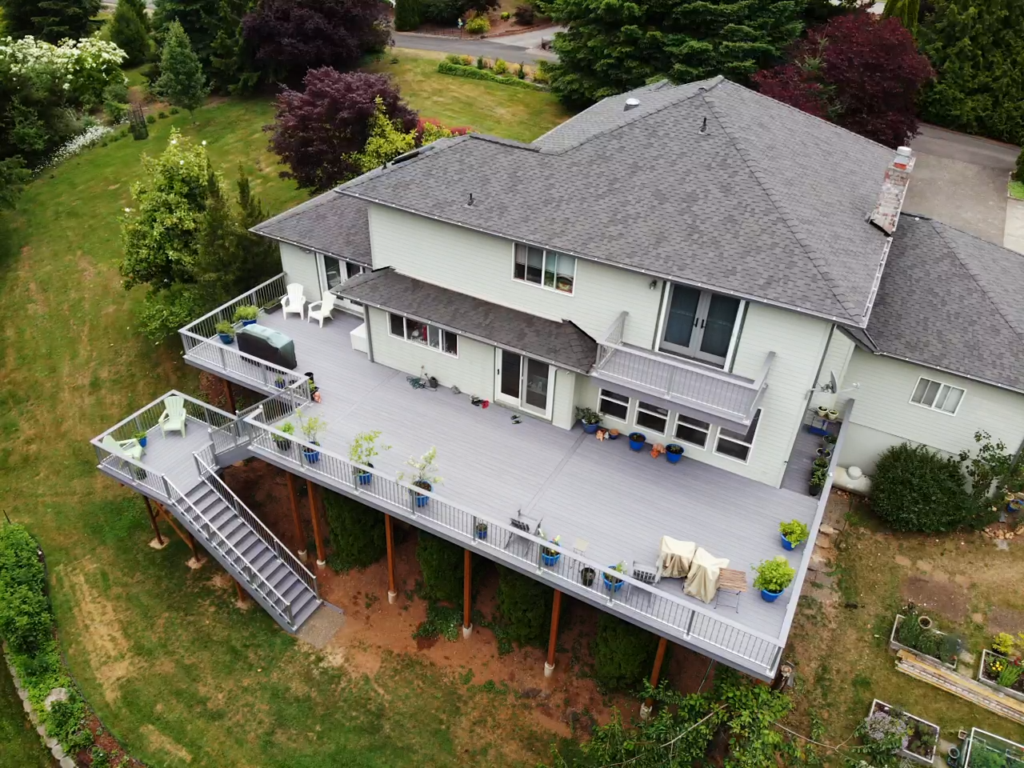
When a home sits on a slope, a large elevated deck can turn an otherwise inaccessible backyard into a full outdoor living space. Projects over 1,000 square feet at significant height often require engineering and substantial underground footings, which your city or county will grant permits for.
Typical budget: $80,000+ (1,000+ square feet)
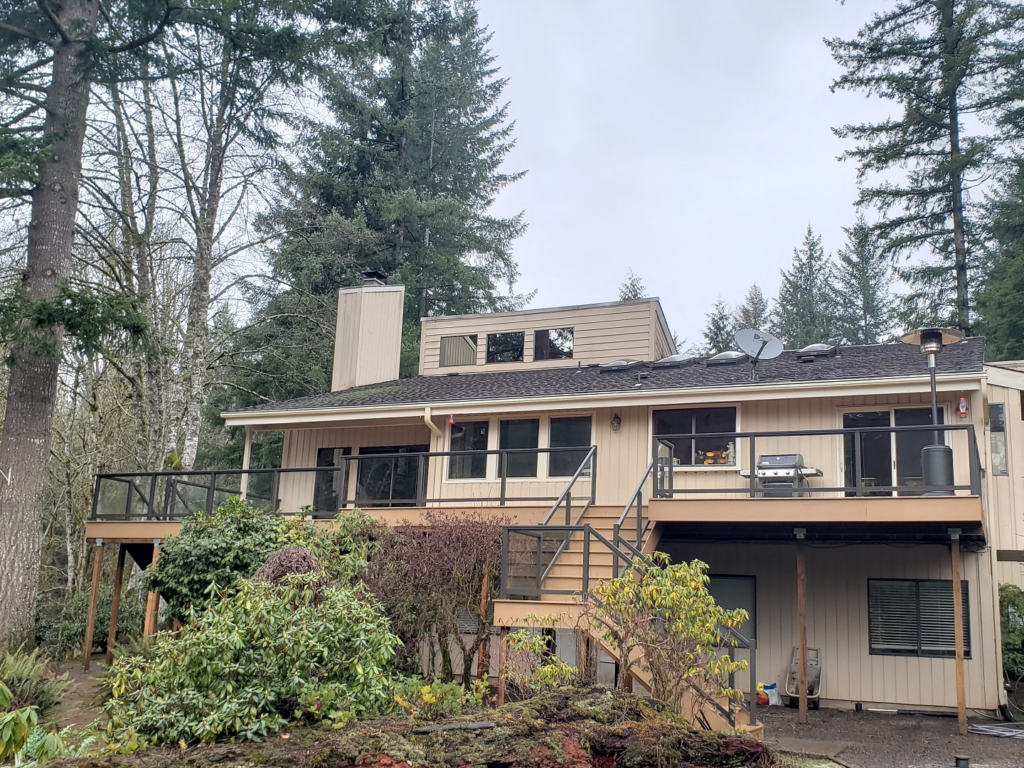
Large Two-Level Deck
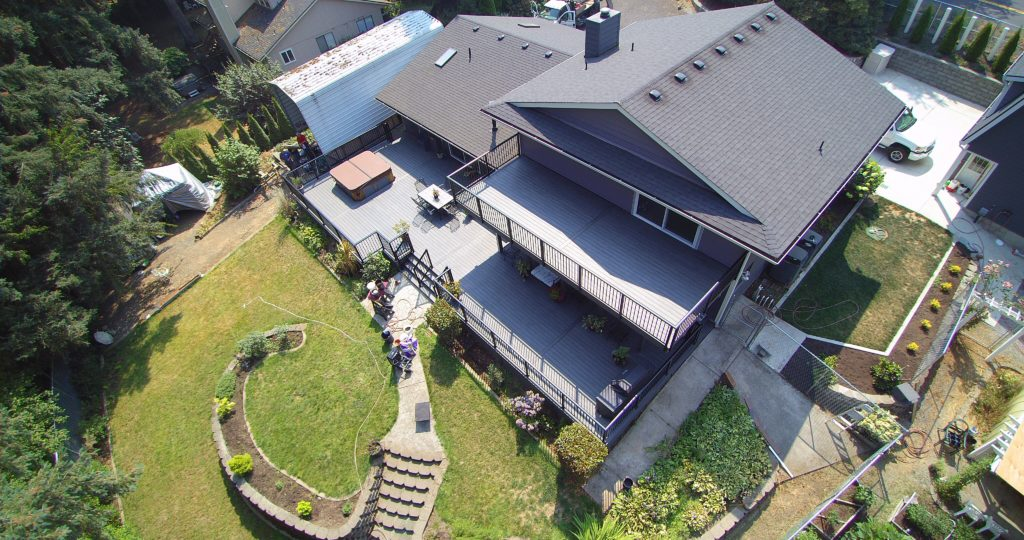
This deck includes composite decking and aluminum picket railing. A recessed hot tub built into the deck allows for easy access, and a covered seating area beneath the upper deck is protected by a waterproofing system. This deck has plenty of space for entertaining, grilling, outdoor dining and personal relaxation.
Typical budget: $80,000+ (1,000+ square feet)
Large Multi-Use Deck
This deck has it all! A gas firepit, outdoor kitchen with bar seating and a built-in TV, spiral staircase, and hidden storage beneath the main deck. Large, ambitious projects like this have budgets to match. While our large projects can start at $80,000, it’s not unusual to get well into the six figure range as you add cool features like these.
Typical budget: $80,000 – $100,000+ (1,000+ square feet)
Small Features That Make a Big Difference
A lot of homeowners focus on the big stuff, like size, material, and railing type, while underestimating how much the smaller details shape the final result. You can have a large deck that functions fine as a platform. Or you can have a deck that actually creates a feeling. A place you want to be.
Some of the details that don’t cost a lot but make a real difference:
- Cocktail rail: serves as a surface for drinks, phones, and candles, and gives the deck a finished, social feel
- Low-voltage lighting: adds ambiance and safety without running up the electric bill
- Planter boxes or built-in benches: functional, good-looking, and they define the space
- A racetrack border: a border board around the perimeter that frames the whole deck cleanly
- Hidden fasteners: no visible screws means a cleaner, more polished surface
- Multiple levels or sections: even a subtle change in height can break up a large deck and give different areas their own identity
These are the details that separate a deck you use from a deck you love.
If You Have a Fixed Budget, Here’s Where to Focus
The single biggest lever you can pull to stay within a budget is overall size. A smaller deck done right will almost always outperform a larger deck done on the cheap.
Beyond that, material selection is your next dial. Choosing a mid-range composite over a premium one, or steel railing over aluminum, can create meaningful savings without dramatically affecting the end result. Your contractor can help you find the right tradeoffs for your specific situation.
Having said that, we’d recommend against cutting corners on the things you can’t see. Framing lumber quality, joist and beam sizing, footing depth, fastener grade, and waterproof membrane under the decking are the decisions that determine how your deck holds up ten years from now. A deck that looks fine today but was framed with undersized joists or cheap fasteners will show it eventually.
Why Cheap Materials Cost More in the Long Run in Portland’s Climate
Portland’s weather is hard on outdoor structures. Wet winters, temperature swings, moss, moisture. It all adds up. Materials that hold up well in a dry climate may not fare as well here.
If you’re on the fence between a lower-end and higher-quality material, our honest advice is to wait and save a little longer to get the better product. A cheaper deck board or a lower-grade fastener that fails in five years costs you more in the end. Not just in repair bills, but in the hassle and disruption of redoing work that should have lasted.
Related: What is the Best Decking to Use in Portland?
What Portland Homeowners Are Building Right Now
One of the biggest trends we’re seeing is the backyard wellness space. More homeowners are incorporating saunas, cold plunges, and outdoor workout areas into their deck projects. It makes a lot of sense since having that infrastructure at home means you’ll actually use it, and the health benefits are real.
Whether it’s a full wellness setup or just a great deck to spend time on, the goal is always to build a space that adds something meaningful to your daily life.
FAQs
How much does a deck cost in Portland?
Most deck projects in Portland fall somewhere between $50 and $150 per square foot, with the average project landing between $30,000 and $40,000. That range is wide because the variables are wide: size, materials, elevation, site conditions, and features all play a role. The best way to get a real number is to talk through your specific project.
What’s the biggest factor in deck pricing?
Size is the most obvious one, but complexity runs a close second. A ground-level square deck and a multi-level deck on a steep slope can be similar in square footage and wildly different in cost. Material selection is the other major lever, both in terms of upfront cost and long-term value.
What’s the most common mistake homeowners make when building a deck?
Focusing only on the big decisions and overlooking the details that actually make the space. Size and materials matter, but it’s the cocktail rail, the low-voltage lighting, the planter boxes, the border board, the hidden fasteners, that turn a deck into somewhere you actually want to spend time. Those details don’t have to cost a lot, and they make an enormous difference.
If I have a fixed budget, what should I prioritize?
Scale back on overall size before you scale back on quality. A smaller deck built well will serve you better than a larger one built with cheaper materials and shortcuts. If you need to trim further, material tier is your next dial: a mid-range composite instead of premium, or steel railing instead of aluminum. What you shouldn’t cut is the stuff you can’t see: framing lumber, joist sizing, footing depth, fastener quality. That’s where decks fail.
Does it matter what materials I choose in Portland specifically?
It matters a lot. Portland’s climate is tough on outdoor structures. Wet winters, temperature swings, moss, and persistent moisture will expose any weakness in lower-grade materials faster than you’d expect. If you’re torn between a cheaper option and a better one, wait and save for the better one. It costs more to fix a deck that fails early than it does to build it right the first time.
Why do two decks that look similar cost very different amounts?
Think of it like cars: the price difference is usually in what you can’t see. On a deck, that means the quality and grade of the framing lumber, whether the joists and beams are properly sized for the span, how deep and wide the footings are, whether there’s a waterproof membrane sealing around the fasteners, and what kind of fasteners were used in the first place. A builder who cuts costs on those things can produce a deck that looks fine on day one and causes headaches for years after.
Ready to Talk About Your Project?
Every deck is different, and the best way to get a real sense of what yours might cost is to walk through the details with someone who builds them every day. We’re happy to do that!