
If your deck is showing its age, the first question is usually not what material to pick. It’s whether you actually need a whole new deck, or whether the one you have is still worth building on.
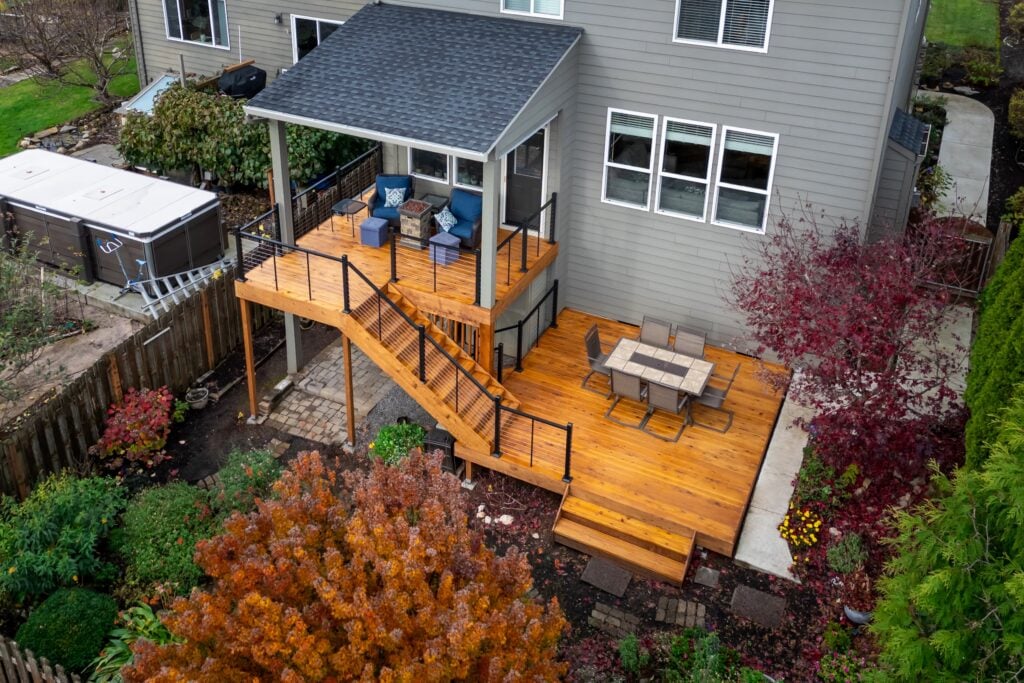
It all depends on your frame. A recent project in Camas, Washington is a good example of how that decision actually plays out, because the homeowner’s frame was in solid shape and he chose to rebuild anyway.
When a deck frame is worth saving
Steffan, one of our estimators, walked a cedar, multilevel deck that had clearly been loved and clearly needed work. The uncovered portion was rough. The railing needed attention. And the upper landing, where the stairs came down, was settling. The post supporting it had started to lean, which is a sign the original build treated that section more like an afterthought than part of the main structure.
“But the rest of his framing, especially under his cover, was in pretty good shape,” Steffan said.
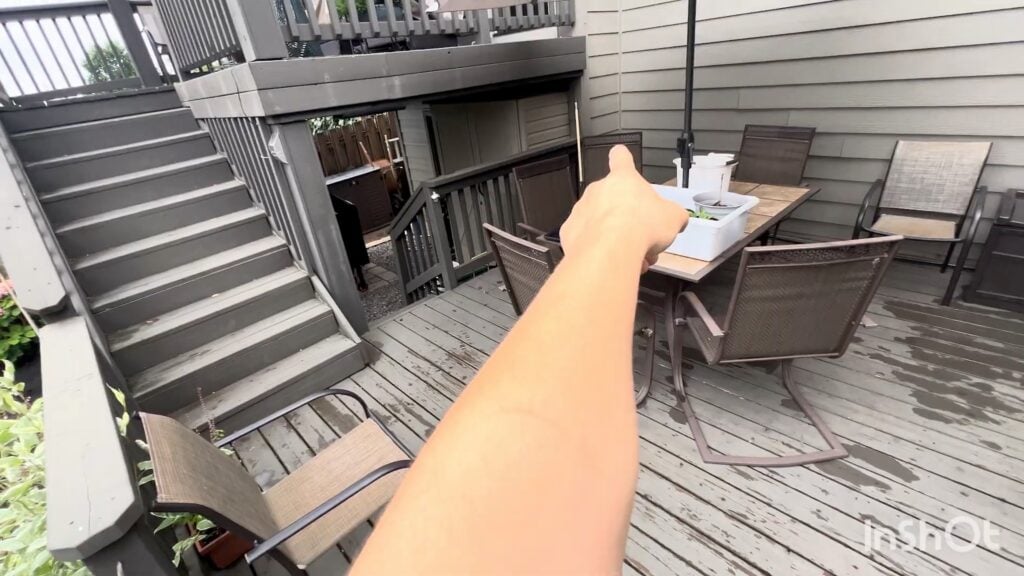
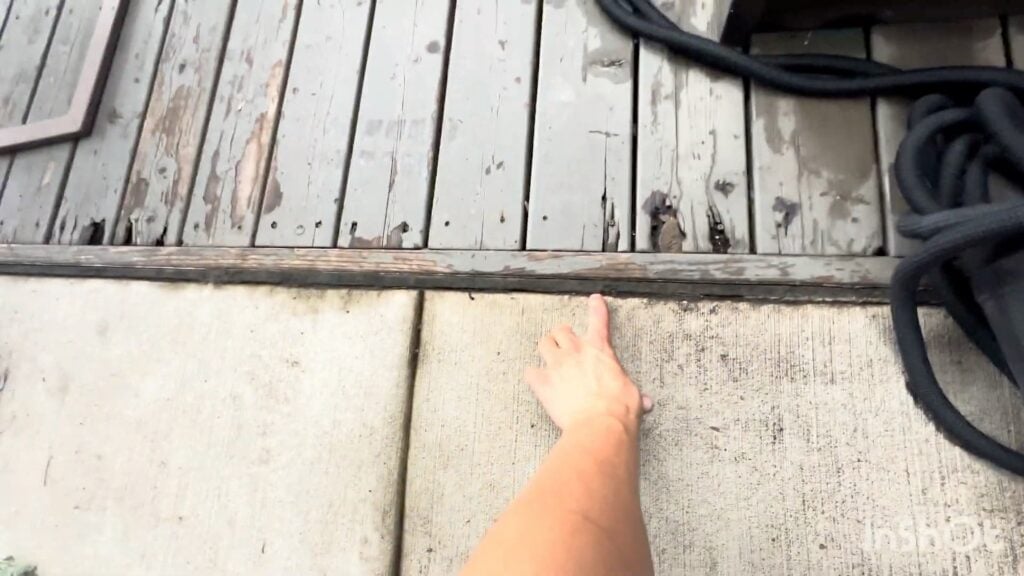
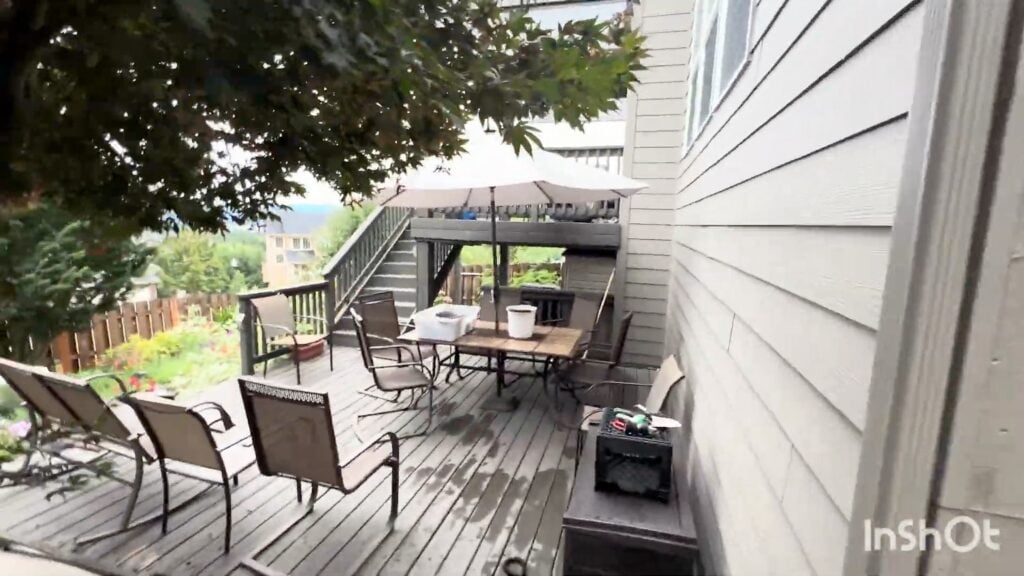
That distinction matters. When we walk a job and the frame underneath is square, solid, and free of rot, resurfacing is a real option. You keep the structure, replace the decking on top, and in many cases repair or rebuild just the section that’s failing, like this homeowner’s settling landing.
One thing worth knowing if you’re considering a resurface: a lot of older decks were framed on 24 inch centers. That works fine for cedar decking, since you can lay new boards right down on the existing frame. But if you want to switch to composite, you’ll often need to add joists in between first, because composite needs tighter framing support than cedar does.
Why this homeowner chose to rebuild anyway
Even with a frame that didn’t need to be torn out, the homeowner decided to start fresh and replace the whole deck.
“It was almost a little bit painful, because I felt like, man, I don’t think this is necessary,” Steffan said. “And he was like, no, we’ll just go all new.”
We laid out every option, resurfacing, partial repair, full rebuild, and the cost and material tradeoffs of each. There was no pressure toward the more expensive route. In this case, the homeowner had a clear reason: his son-in-law had a Cascade cedar deck and wood cover built recently, and he’d seen it in person. He knew exactly what he wanted, and he wanted to start clean.
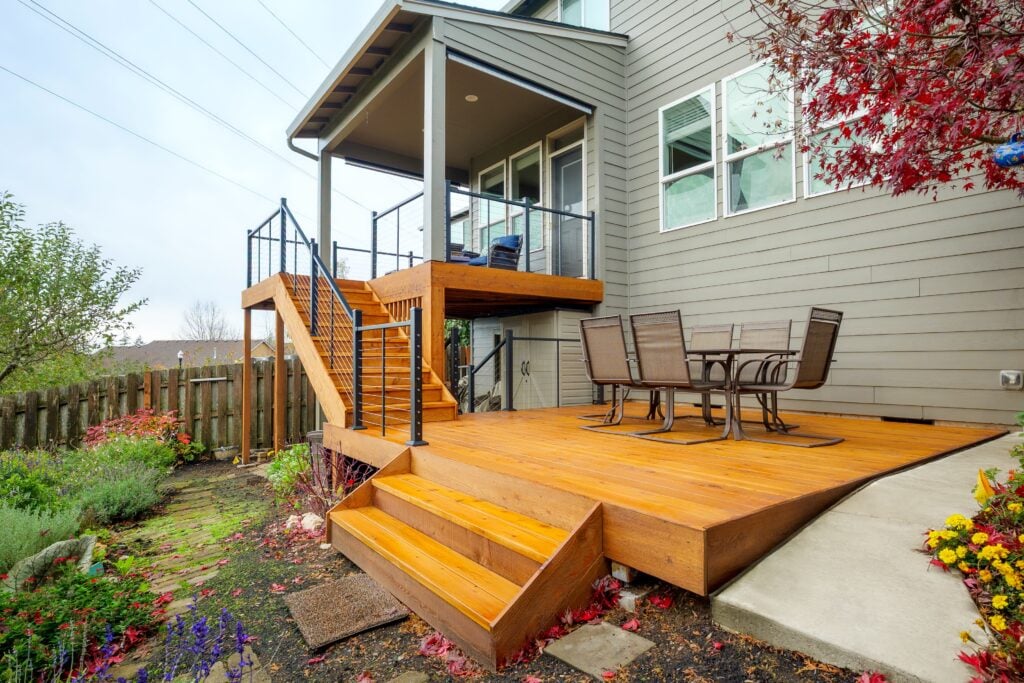
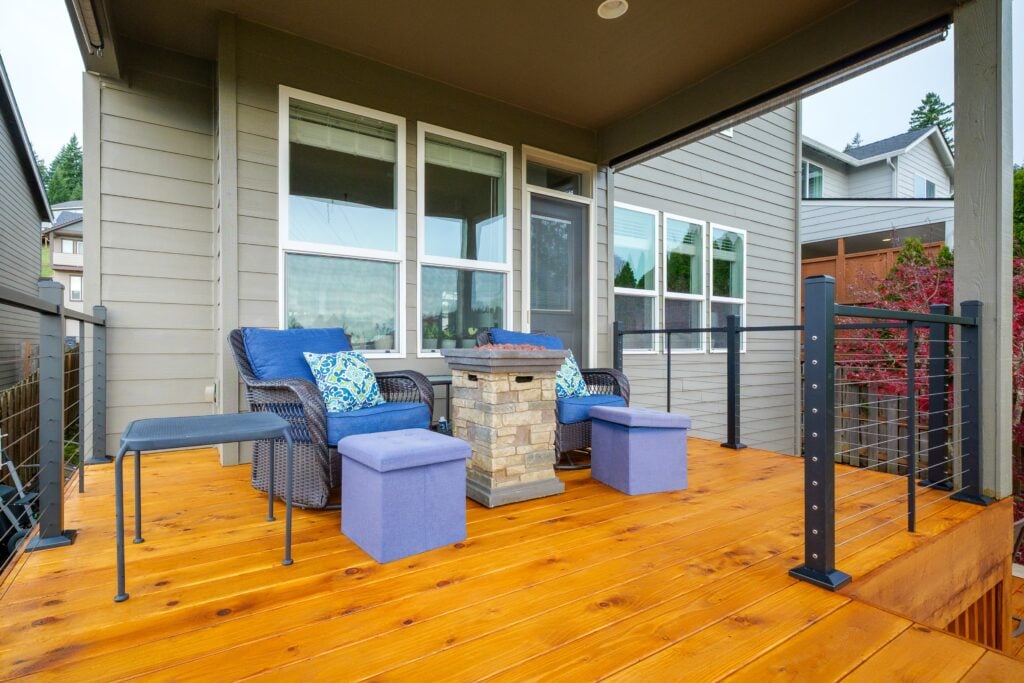
For us, a full rebuild does simplify things on our end. When we’re not working around an existing frame, we’re not questioning old footings or dealing with a structure that’s slightly out of square. We get to build the whole thing our way from the ground up. But that’s a byproduct of the homeowner’s decision, not the reason we recommend it. If a frame is solid, we’ll tell you resurfacing or a partial repair is the smarter move. If it makes sense to rebuild, we’ll tell you that too.
Cedar, cable railing, and the details that made this deck personal
The homeowner kept the same layout his old deck had, with one small addition: a custom infill next to the main stairs, closing a gap that had always been there. The lower landing’s steps got widened. And while the crew was working near the house, they also replaced some corner trim that had started to fail close to the deck.
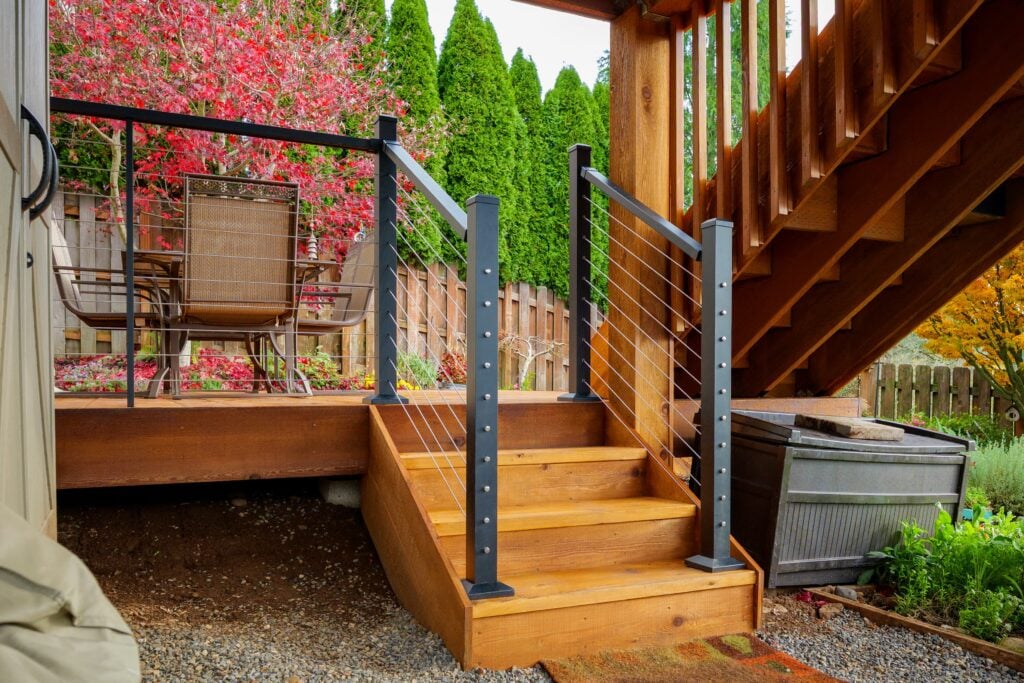
The bigger decision was the railing. This homeowner’s view was the whole point of the deck, since the property sits up on a hill overlooking the river. That view is exactly why cable railing made the most sense.
“Cable is one of the best ways you’re going to maximize your view,” Steffan said. “Whereas you can do glass, but glass is so much maintenance on keeping it clean.”
We showed him renderings with picket railing as a comparison, along with composite decking samples, so the choice was informed rather than assumed. He liked seeing the different options laid out, weighing the tradeoffs between cost, maintenance, and how much of that river view he’d actually get to see. In the end, he chose cable railing and stained cedar decking, the same combination his son-in-law already had.
The bigger takeaway on resurfacing versus rebuilding
The pattern we see most often is that homeowners land on one of two extremes. Some want to reuse a frame that’s genuinely beyond saving. Others rebuild a deck when the frame underneath was still fine.
Neither instinct is wrong exactly, but they’re both worth checking before you commit to one. A good estimate should tell you honestly which category your deck falls into, and let you decide from there. Sometimes redecking is the right call. Sometimes, like this homeowner, you’ll look at a sound frame and still decide a clean rebuild is worth it, for the layout tweaks, the finish, or just the peace of mind of knowing everything under your feet is new.
Thinking about resurfacing or rebuilding your own deck?
If your deck has a section that’s settling, decking that’s showing rot, or a railing that no longer does the view justice, the first step is getting an honest read on your frame. That’s what decides whether you’re looking at a resurface, a repair, or a full rebuild, not the other way around.
We’re happy to walk your deck and tell you straight what we find. Request an estimate and we’ll help you figure out which option actually fits your project.