
We’ve found that small backyards don’t need more features—they need better planning.
In Portland especially, where space is limited and the weather plays a role in how often you’re outside, the difference usually comes down to how the space is designed, not how much is added to it.
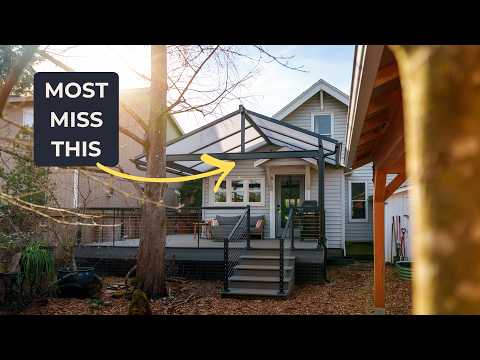
To dig into that a bit more, we sat down with Steffan, one of our estimators at Cascade Fence and Deck, and asked how he approaches designing smaller backyards. We used one of his recent projects as a reference point—a yard that included a deck, fence, patio cover, and carport, all within a relatively tight layout.
Here’s Steffan breaking down the project and the decisions behind it:
Start with Function, Not Features
One of the first things Steffan pointed out is that homeowners often start by thinking about what they want to add a deck, a fence, maybe a cover.
But in smaller spaces, that approach can backfire.
“Part of the challenge was you have a small space. How do you utilize it without making it look too cluttered?”
Instead, we try to step back and ask: what does the space actually need to do?
In this project, the priorities were straightforward:
- A place to sit and spend time outside
- More privacy from neighbors
- A secure place to park
Once those were clear, the design decisions followed.
Layout Does Most of the Work
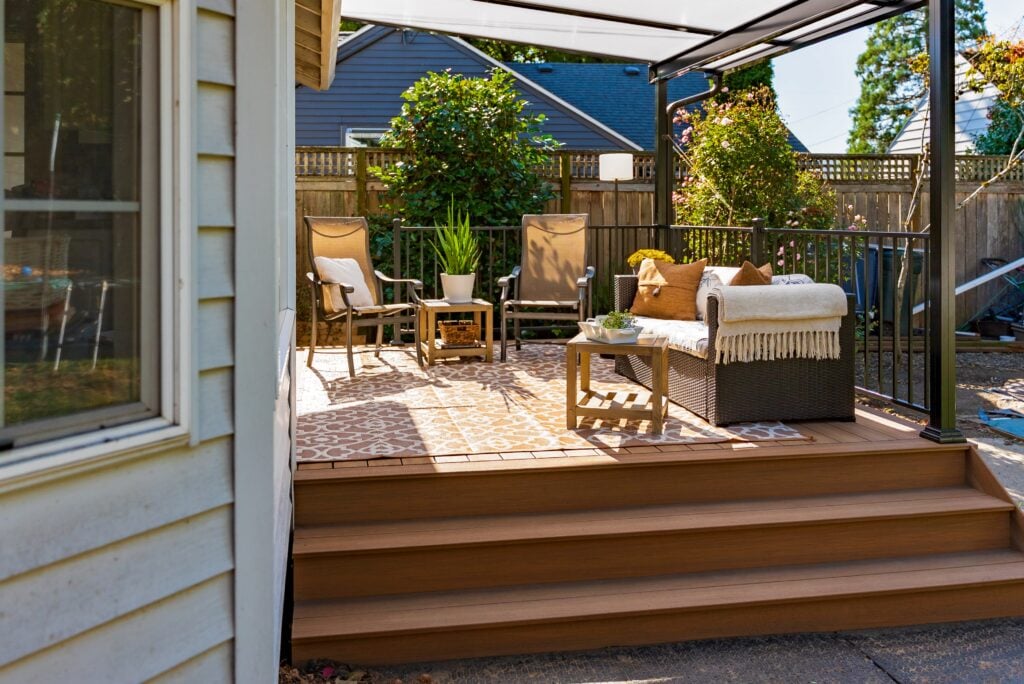
With a smaller backyard, layout matters more than square footage.
“Everything was assigned a position in the yard, but without making it look too cluttered.”
Rather than filling the yard, the goal was to organize it:
- The deck became the main usable space
- The carport was pushed into the corner along the fence
- The fence itself helped define the perimeter
Keeping the center of the yard open helped everything feel less compressed, even with multiple structures in place.
Design Around When You’ll Use the Space
Another point Steffan brought up is something that often gets overlooked, timing.
“When you think of a deck, when are you going to be using your deck? It’s going to be in the morning or in the evening.”
That has a direct impact on design decisions.
In Portland, that usually means planning for:
- Rain
- Lower light conditions
- Cooler evenings
Which is why covered decks tend to make more sense than open ones for a lot of homeowners.
Cover Without Blocking Light
One hesitation we hear a lot is that adding a cover will make the home feel darker.
In this case, we used an Acrylite cover to avoid that issue.
“They give you that coverage from the elements, but also let natural light in.”
It’s a practical option in the Pacific Northwest, especially when the deck sits directly outside windows.
Privacy Changes How the Backyard Feels
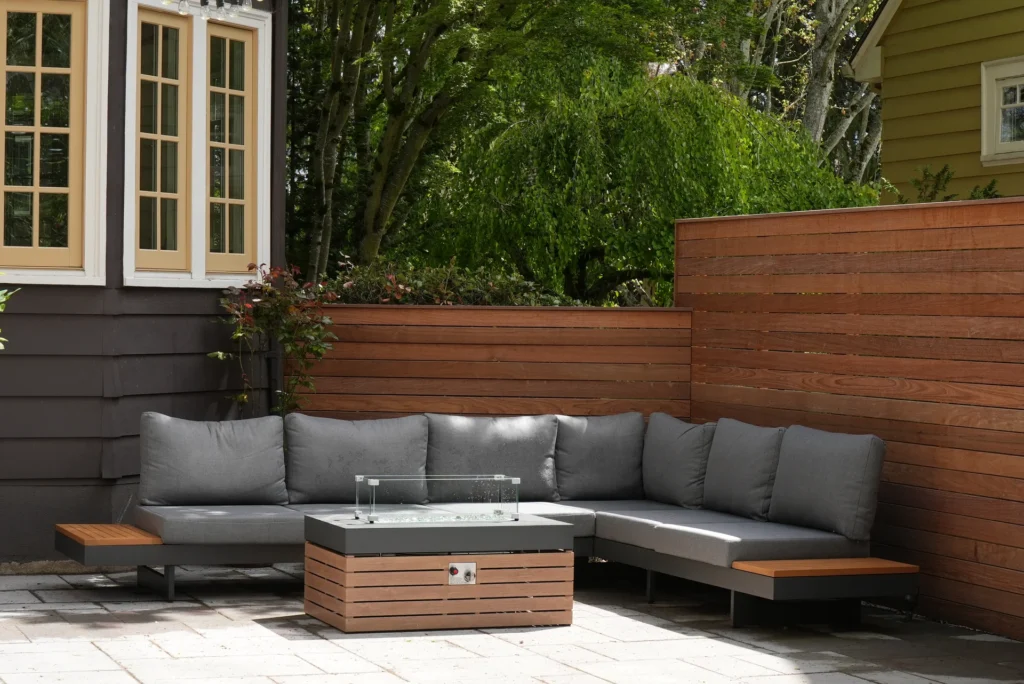
The original yard had a chain link fence, which didn’t offer much separation from neighboring properties.
“Before there was just a chain link fence there, which doesn’t offer much privacy or security.”
Switching to a cedar fence made the space feel more usable right away.
We also tend to recommend steel posts here in Portland:
“They’re not going to rot, especially in our area… there is not a huge price chasm between a pressure-treated 4×4 post and a steel post.”
It’s a small change that makes a difference over time, especially with moisture exposure.
Details Matter More in Smaller Spaces
In a larger yard, small design details can get lost. In a smaller one, they stand out.
A few that came up in this project:
- Cable railing to keep views open
- Cocktail rail for added function
“It’s a pretty relatively affordable upgrade that just increases the look overall.”
- Picture framing around the deck
“It hides the ends of the deck boards, creates a much cleaner look.”
- Skirting to finish the underside
“There’s nothing that looks more finished than having skirting on your deck.”
None of these are necessary on their own, but together they help the space feel more intentional.
Lighting Extends How the Space Gets Used
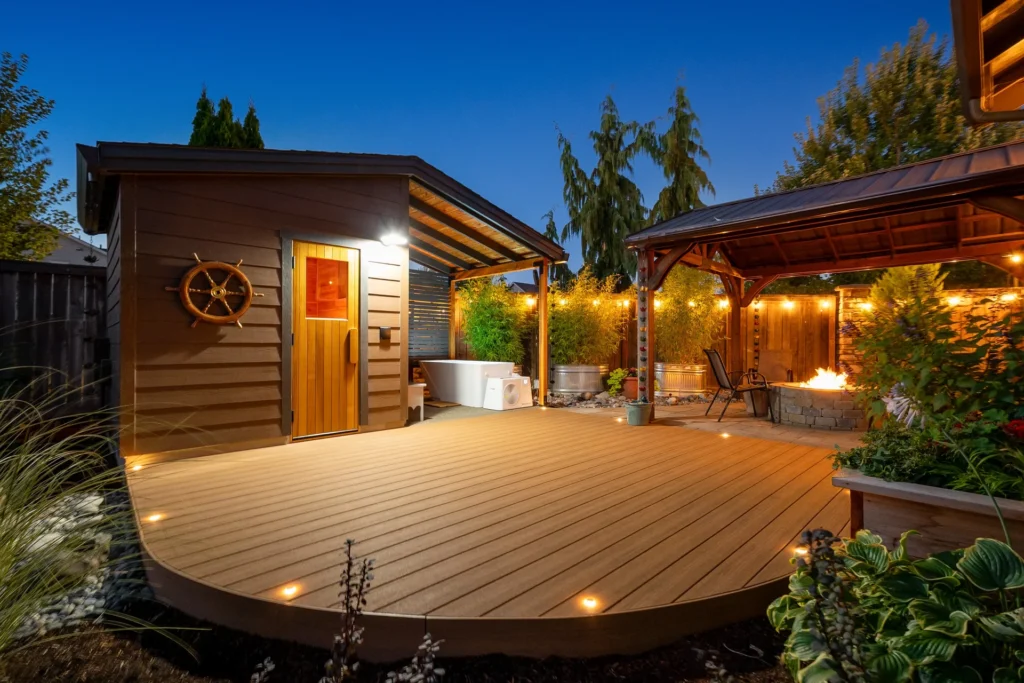
Lighting is one of those features that often gets added later, but it’s worth thinking about early.
“Adding lights… can take that deck from like a seven to a 10 right away.”
Especially in Portland, where evenings are when most people are outside, lighting helps:
- Make the space safer
- Extend how long it can be used
- Add a layer of visibility without overcomplicating the design
A Little Preparation Goes a Long Way
One thing that helped this project move smoothly was how the homeowner approached the initial conversation.
“Jennifer sent in a video… she even had a drawing with some dimensions that she had sketched out.”
That doesn’t mean you need a full plan before reaching out, but having a few ideas helps.
“If you know what you want, we can eliminate a lot of back and forth.”
Even a rough direction—materials, layout preferences, or inspiration photos—can make the process more efficient.
Final Thoughts
What we’ve seen over time is that small backyards don’t benefit from adding more, they benefit from being thought through.
This project worked because each part of the yard had a role, and everything was placed with intention.
“The backyard now feels like everything has a place.”
That’s usually the goal. Not to fit everything in, but to make the space feel like it works.