
“How tall can my fence be?”
It’s a great question because the answer changes depending on where the fence sits on your property. We’ve worked on hundreds of fences across Oregon and Washington, and one of the biggest surprises for homeowners is learning that the front yard and backyard are usually treated completely differently by local codes.
In most neighborhoods, especially subdivisions, cities want to preserve visibility for traffic, pedestrians, and emergency responders. That’s why there are often stricter rules for front yard fences than backyard privacy fences.
If you want to hear it from one of our experts watch this video by Leif below!

The General Rule We See Most Often
Across much of Oregon and Washington, the most common residential fence height rules look something like this:
- Front yard fences: typically limited to 42 inches (3.5 feet) or sometimes 4 feet
- Backyard fences: usually allowed up to 6 feet
- Corner lots: may have additional “clear vision” restrictions near intersections and driveways
The transition point between “front yard” and “backyard” is usually determined by the front face of your house.
A simple way we explain it to customers is this:
If you draw an imaginary line parallel with the front of your home, anything in front of that line is typically considered the front yard. Once the fence moves behind that plane of the house, you’re generally allowed to step up to a full 6-foot privacy fence.
That’s something we do all the time on projects where customers want a lower decorative fence toward the street that transitions into privacy fencing farther back along the side yard.
Why Front Yard Fence Heights Are Restricted
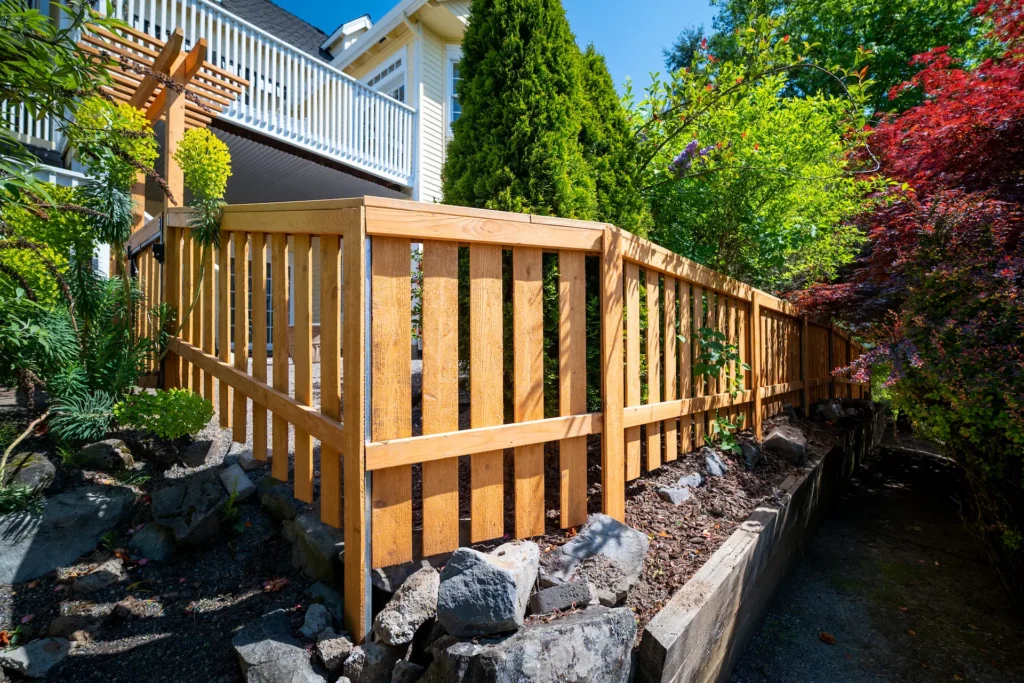
A lot of homeowners assume cities just don’t like tall front fences, but there are practical reasons behind it.
Lower front yard fences help with:
- Visibility for drivers backing out of driveways
- Sight lines at intersections
- Access and visibility for firefighters and emergency services
- Neighborhood appearance standards
- Pedestrian safety
That’s why many cities also require “clear vision triangles” at corners where fences must stay lower or more open.
We’ve seen situations where a homeowner planned a full 6-foot privacy fence all the way to the sidewalk, only to find out the city required the front section to be dropped down significantly.
It’s much easier to plan for that upfront than rebuild part of the fence later.
What We Commonly See in Oregon
Oregon cities tend to follow very similar patterns, although every municipality can have its own exact code language.
Here are some examples:
Portland, Oregon
Portland generally allows:
- Fences up to 7 feet without a permit in many rear and side yard situations
- Front yard fences are commonly limited to around 3.5 feet to 4 feet depending on zoning and placement
Oregon City
Oregon City specifically states:
- Between the house front and the street, fences are limited to 42 inches
- Behind the front facade of the home, fences can go up to 6 feet
Honestly, this is one of the clearest examples of the exact layout we explain to customers every day.
Salem
Salem’s code allows:
- 4-foot fences near the front property line
- Taller fences farther back on the property
- Up to 6 to 8 feet in rear and side yards depending on location
Forest Grove
Forest Grove follows a very common pattern:
- 42 inches in front yards
- 6 feet in side and rear yards
What We See in Washington
Washington cities often mirror Oregon’s approach.
Most municipalities around Vancouver, Camas, Ridgefield, and the greater Seattle suburbs follow similar standards:
- Front yard fences typically capped at 3.5 to 4 feet
- Backyard privacy fences allowed up to 6 feet
- Additional restrictions on corner lots for visibility
HOAs are also very common in Washington subdivisions, and sometimes the HOA rules are actually stricter than the city code.
We’ve seen plenty of neighborhoods where the city would allow a 6-foot fence, but the HOA only allows 5 feet or requires a certain style facing the street.
Corner Lots Can Change Everything
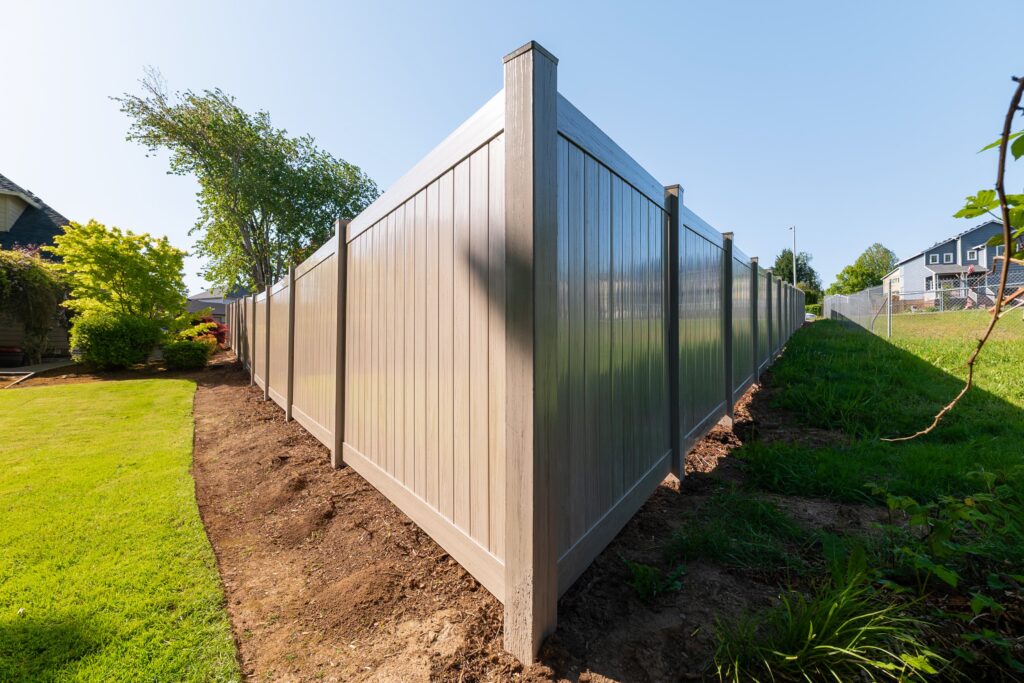
One thing homeowners don’t always realize is that corner lots usually come with extra fence restrictions.
If your property sits on a corner, the city may require:
- Lower fence heights near intersections
- Open picket or ornamental styles instead of solid privacy fencing
- Visibility clearance areas near sidewalks and driveways
This is one of the biggest reasons we always recommend checking local requirements before starting a fence project.
Do You Need a Permit?
In many Oregon and Washington cities:
- Standard residential fences under 6 or 7 feet often do not require a building permit
- Taller fences usually do
- Pool fencing almost always has separate safety requirements
But even if a permit isn’t required, the fence still has to meet zoning and height rules.
That’s an important distinction.
We’ve seen homeowners assume “no permit” means “anything goes,” and that’s definitely not the case.
Our Advice Before Building
After doing this for years, here’s what we usually recommend:
- Know exactly where your property lines are
- Check city zoning requirements
- Verify HOA restrictions if applicable
- Pay attention to corner lot visibility rules
- Plan fence transitions carefully from front yard to backyard
A well-designed fence can absolutely balance curb appeal and privacy. In fact, some of the best-looking projects are the ones where we gradually step the fence up from a lower decorative front section into full backyard privacy fencing.